

 March
18,
2026
March
18,
2026

Early in my career, I was asked to build a new business inside a global consulting firm.
I recruited over thirty high-performing professionals with strong reputations. They were talented, credible, and ambitious. They were also scattered across the United States working on unrelated client engagements, with no natural reason to feel connected to one another.
If they remained a loose collection of individual performers, we would fail.
I needed them to align around a new idea. I needed common frameworks and tools. I needed standards that would apply across projects. Most of all, I needed them to see themselves as part of something shared.
So I designed for it.
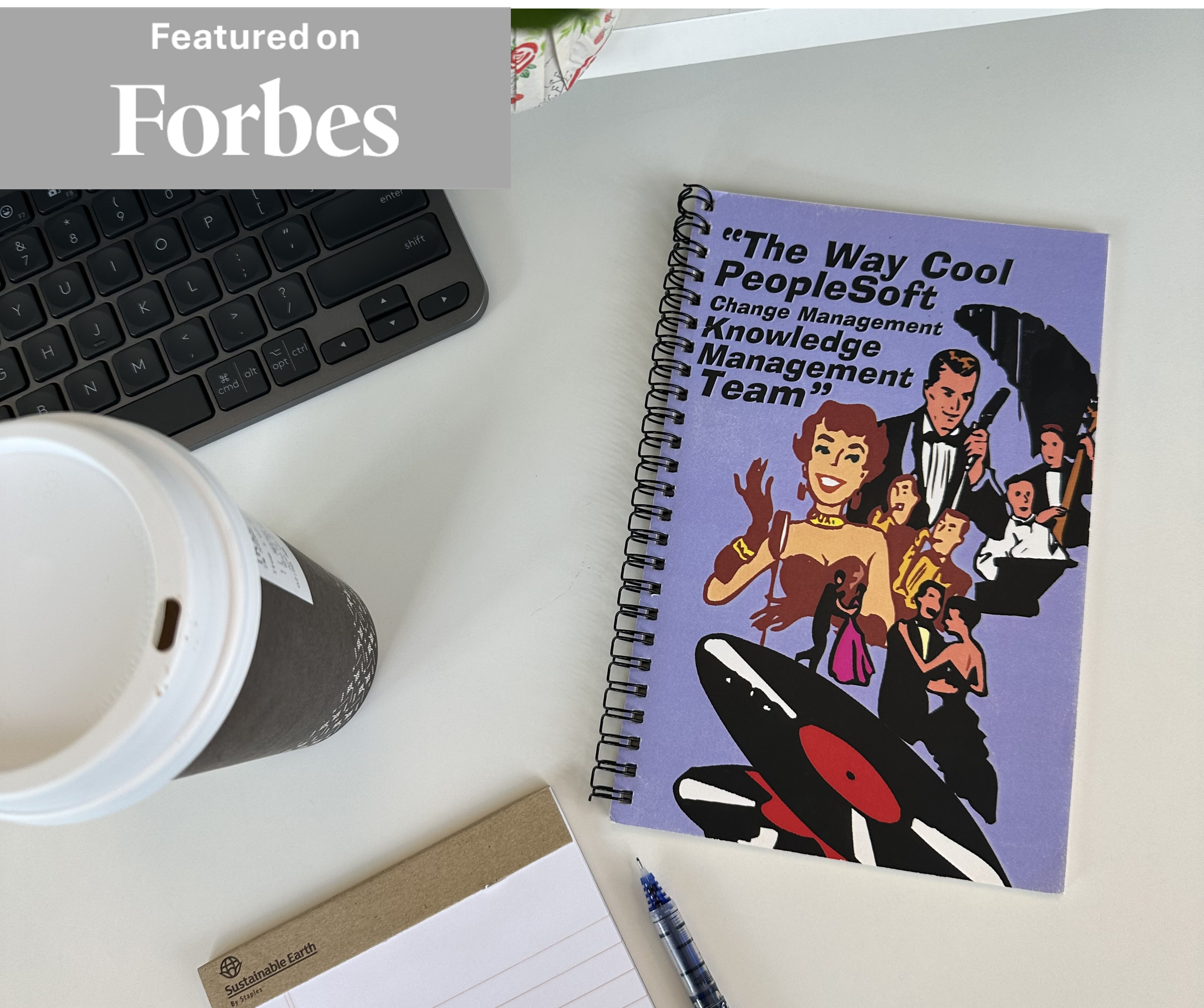
I spoke to each person directly. I created quarterly offsites where we built our tools together. I designed a team book with photos and personal details so people could connect as humans, not just resumes. (I actually found the book! It’s pictured above)
The talent was there. What changed was the cohesion.
Together we created a standard for operating. We grew the business from zero to $38 million.
This is the work every leader faces, whether inheriting a team or building one from scratch. The question isn’t whether belonging exists. The question is whether we leave it to chance or design it deliberately.
Belonging is not a sentiment. It is structure. And it can be built through five elements: Fit, Form, Function, Focus, and Frequency.
Fit: Who belongs here?
Not everyone who is attracted to your team is a fit for your team. Effective teams are not open by default. They are intentionally selective.
Fit isn’t about likeability or cultural sameness. It’s about mutual expectations, what the work demands, and what each person must contribute. When we make those expectations explicit and select our team members accordingly, we make belonging durable.
Aaron Carruthers, Executive Director of California’s State Council on Developmental Disabilities, leads a thirty-one-member governing body that impacts statewide advocacy and policy. Members include people with developmental disabilities, family members, and representatives from state agencies. Each member serves a six-year term.
The appointment process is rigorous by design. Regional managers identify potential members. Candidates formally apply, participate in multiple interviews, and if selected, apply to the Governor’s office. The bar is high, and the expectations are explicit.
As Aaron explains, “Belonging isn’t ‘Do I have a seat at the table? That’s tolerance. Belonging is, ‘We’re going to be different because you’re here.’ We clearly talk about their impact. We tell people directly: Here’s how this organization changed because you are here.”
That clarity creates commitment. Members show up prepared and alumni remain engaged long after their terms end. Belonging persists because it was grounded in fit – real authority paired with responsibility.
Early in my firm’s growth, I confused kindness with inclusion and effort with fit. I kept someone on the team who was capable but not aligned with how we worked. The result wasn’t harmony; it was a quiet drag. When I finally clarified expectations and made a hard call, performance didn’t dip. It improved. The team grew stronger because the standards were clear.
Leaders often fear that being selective will feel exclusionary. The opposite is true.
Fit, clearly defined, is what makes belonging meaningful. Without it, teams take on passengers. With it, they earn loyalty, accountability, and sustained performance.
Form: What does belonging look like in this context?
Belonging must match the current form of your organization.
A team going through a transformation needs something different than a team in a steady state. For example, during a rebuilding stage, belonging requires clarity, speed, and disciplined connection, not broad participation. We might need fewer voices, tighter decisions, and greater reliance on proven expertise. As stability increases, we can widen ownership and invite in more perspectives.
Leaders make a mistake when they offer the same version of belonging everywhere.
Following senior leadership roles at Amazon and Robert Half, Sean Perry joined a global staffing agency as CIO during a full-scale organizational transformation. Once an industry powerhouse, the firm retrenched to the U.S. market and grew fragmented — with teams aligned to their own business units rather than to the enterprise.
He started with a guiding question: How do we give people great tools while eliminating unnecessary complexity?
He introduced a Brain Trust – not to solve problems but to define them clearly. This helped teams understand what others were working on and how their decisions affected one another. He replaced a weekly meeting with a 15-minute, voluntary 8:00 a.m. standup three days a week. It quickly reached 90% attendance and proved far more effective for connection, quick issue resolution, and information flow. Teams also adopted six-page annual planning documents covering what happened, what went wrong, customer pain points, and what the team intends to do differently. Leaders read each other’s documents to build a shared understanding.
Early on, Sean organized the work by function, to restore operational control. Later, once the core operating practices were in place, he loosened the structure, shifting toward cross-functional collaboration and shared ownership.
The form evolved as the organization stabilized.
In one phase of rebuilding my own organization, I over-democratized decisions when what we needed was speed. It felt inclusive. It wasn’t effective. When we narrowed decision rights temporarily, alignment and efficiency improved. And so did trust.
Belonging must change as conditions change. Design how your team connects and contributes to match the stage you’re in.
Function: Who decides what?
Belonging does not mean everyone decides everything.
Healthy teams separate inclusion from authority. They distinguish between being heard, being considered, and being accountable for the outcome.
As a senior enterprise leader navigating major business transformation, Janey Piroli faced a familiar problem: capable teams that felt siloed and disempowered to make decisions. In response, she introduced PACE teams – Purposeful, Accelerated, Cross-Functional, and Empowered – structured as twelve-week sprints working on strategic priorities.
They designed these teams intentionally. Each had an executive sponsor, decision rights, and representation across regions and functions. Groups were kept small – seven to nine people – so they could go deep. The target was to reduce participants’ day-to-day workload by 50%. Team members received coaching. Leaders were encouraged to experiment. Sloppy first drafts were expected.
The impact was measurable. Engagement scores rose ten to fifteen points. Participants reported stronger connection and greater confidence when making decisions. Just as importantly, they carried what they learned back into the organization.
Function worked because belonging carried accountability. Participation was purposeful, and authority was explicit.
Focus: What matters most?
Belonging directs attention. It clarifies priorities, reinforces shared standards, and signals what the team exists to accomplish.
Dr. Ramona Arora, human capital field researcher and enterprise talent development executive at Dell Technologies and The Walt Disney Company, notes that organizations such as Disney, Dell, and her current organization, Cencora (formerly AmerisourceBergen), have endured by redefining leadership. They shifted from measuring leaders solely on what they produce to holding them accountable for how they produce it.
Belonging, in this sense, is not about comfort, but about contribution. It signals that you are part of something, and responsible for shaping it.
At Disney, that shared ownership shows up through a clear norm around feedback. Creatives across Disney Animation Studios, Marvel, Lucasfilm, and Searchlight expect notes: ongoing, candid input designed to strengthen the work as it unfolds over years. Notes are not criticism. They are participation, and a disciplined form of listening.
That same philosophy extends beyond the creative room. Disney doesn’t see audiences as passive observers. It seeks to make them feel part of the story itself, emotionally invested and connected.
Listening as a belonging practice carries into Ramona’s work at Cencora. Employees from the frontlines work directly with patients and customers to gather notes. “Listening is one of the most tangible ways we practice belonging,” Ramona explains. “Employee, patient, and customer stories shape how we work. They are not on the sidelines of our mission. They are part of building it.”
Belonging and high performance are not in tension. But that belief has to live in norms. Leaders must be willing to say, “That’s not working,” and model letting go of ego, whether that note comes from a colleague, a frontline team member, or someone the organization serves.
According to Ramona, what sustains that effort is curiosity. “Curiosity functions both as a behavior and a signal. It gives people permission to raise a hand, challenge a process, step away and return with something better.” Curiosity makes listening possible. It keeps standards high while keeping people open.
Focus becomes powerful when we make priorities explicit and curiosity safe. People don’t just feel included. They direct their energy toward improvement.
Frequency: How often do leaders reinforce belonging?
Frequency turns belonging from intent into habit.
Every time Sean Perry’s team met for a short 8:00 a.m. touch-base, they reinforced connection to one another and commitment to shared goals. Meeting three times a week signaled urgency. The pace itself communicated that the work mattered and that staying aligned was non-negotiable.
Janey Piroli’s twelve-week sprint cycles sent a similar signal. Repetition reinforced that strategic problems deserved focused attention, and that thoughtful contributions would have visible impact. The cadence created momentum and closure.
In my own leadership practice, I’ve learned that inspiration fades but cadence holds. We start each week with a standing executive session tied to a single priority, and close with an optional all-hands that reconnects us to shared outcomes. The agenda shifts, but the rhythm doesn’t. That consistency reinforces alignment. And when we’ve skipped it during busy stretches, drift shows up immediately – slower decisions, narrower thinking.
Without frequency, even well-designed systems decay.
Research helps explain why. Anthropologist Dimitris Xygalatas has shown that repeated group practices, even simple ones, create emotional regulation and social connection. Predictability lowers uncertainty. Familiar rhythms build trust.
Belonging doesn’t live in mission statements. It lives in the habits leaders repeat.
Belonging, by Design
As Janey Piroli puts it, “Belonging lives in the head, heart, and hands of leadership. It requires moving away from command-and-control toward awareness of systems, structures and people. Training alone isn’t enough. It has to be embedded.”
That’s why Fit, Form, Function, Focus, and Frequency matter. Together, they turn belonging from an abstract ideal into a practical operating model. Leaders decide who belongs, how work is organized, who holds authority, what matters now, and how often teams reconnect to purpose and standards.
When these elements are designed intentionally, belonging accelerates performance. Ideas surface faster. Accountability strengthens. Energy compounds.
Belonging isn’t something you declare. It’s something you build. And when leaders design it well, teams don’t just feel connected. They deliver.