

 November
17,
2026

Each project is well-managed. But can your employees absorb them all?
Let’s say you have a big change project: a new system, new processes, and shifting roles for employees.
You need it to pay off, so you build a plan; you identify stakeholders, assess impacts, engage the workforce, build and deliver training, measure readiness, and go live.
Now zoom out and see the landscape of your organization. How many similar projects are happening at the same time? More importantly, how many are affecting the same employees you just got across the finish line? Do they have another finish line in three weeks?
Each initiative may be well managed on its own, but employees might still be overwhelmed.
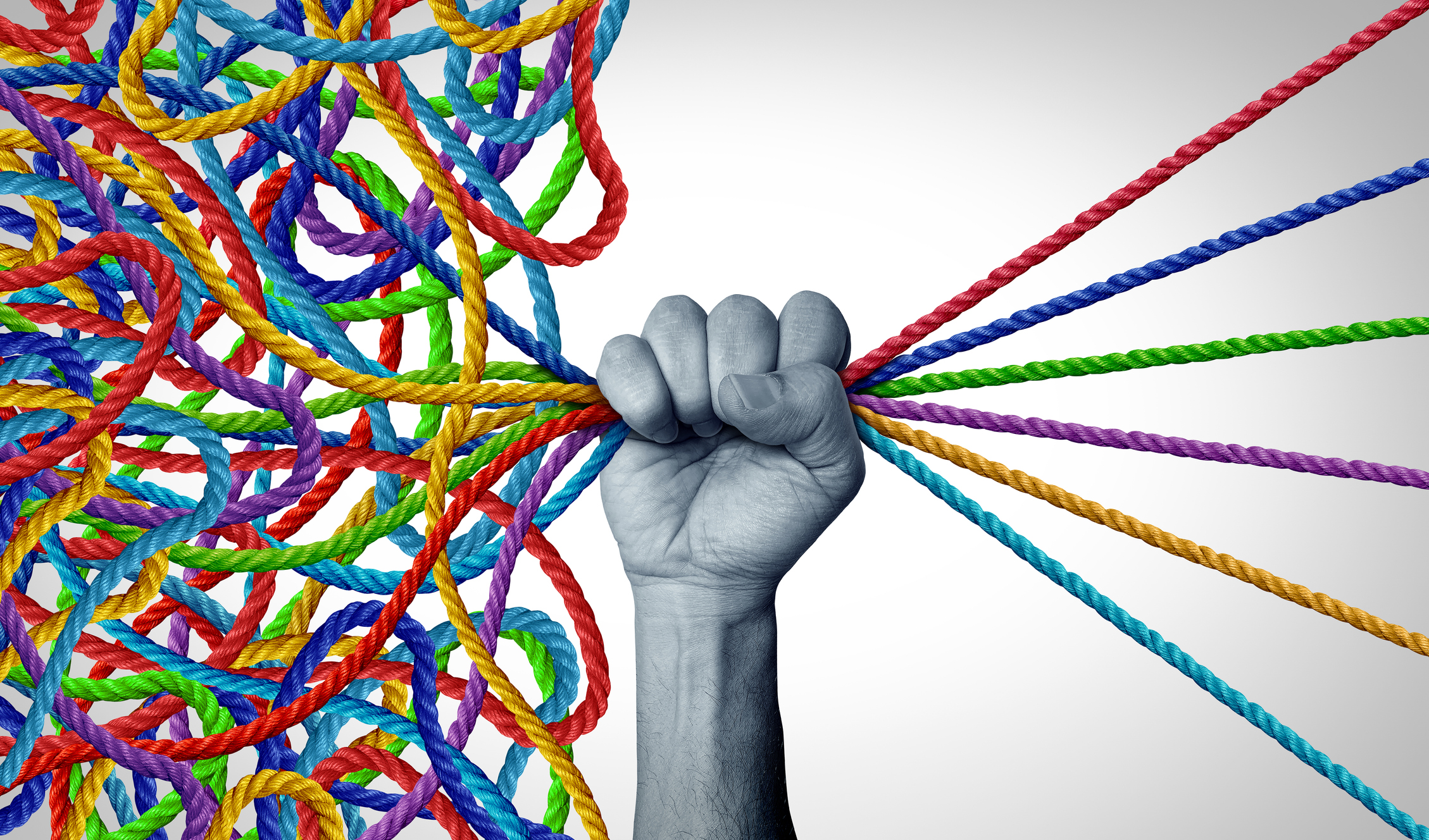
Leaders tend to manage change project by project, while employees experience change cumulatively. A finance team does not experience “Project A” and “Project B” as separate workstreams. They experience a new system, a redesigned approval process, a leadership change, new performance expectations, and mandatory training — all while trying to get their regular jobs done.
So, the question is not only, “Are these employees ready?” but “What else is happening to these employees?”
The Project View: Identify concurrent initiatives.
At Emerson, we build this question into our change management work from the beginning of each project.
One of our early working sessions is called Company Topography. The purpose is to understand the organizational landscape around the change: which stakeholder groups are affected, how they are affected, and the type and degree of impact each group will experience.
Part of this effort is asking, “What other changes are happening to the same people impacted by our project?” We call these concurrent initiatives.
We identify the other projects and transformations underway and map them against the stakeholder groups affected by our initiative.
For example, we might find that:
- Frontline managers are also implementing a new performance process;
- HR business partners are supporting an organizational redesign;
- Customer Support is simultaneously absorbing new technology, new policies, and a staffing-model change.
That information changes how we manage our own project. A stakeholder group that appears to have a modest impact from our initiative might actually be experiencing substantial cumulative change. That means what we do for those employees should be different if we want our project to succeed.
Suppose one stakeholder group has three major initiatives landing within the same quarter. The answer is not necessarily to send three sets of communications more efficiently. Instead, you might ask:
- Can communications be coordinated?
- Can managers receive one integrated view of what their teams need to know?
- Can training be sequenced differently?
- Can one initiative move its timing?
- Can the organization distinguish what employees need to know now from what can wait?
- Can leaders acknowledge the volume of change rather than discussing each initiative as though it exists in a vacuum?
- Can project teams share change champions, manager forums, or reinforcement channels instead of competing for the same people’s attention?
Identifying concurrent initiatives turns change management from “How do we land our initiative?” into “How do we help this population succeed through everything that is happening?”
This is still a project view. We’re trying to help our project succeed by coordinating efforts and clearing obstacles. But there’s another view.
The Portfolio View: Beyond the Project Lens.
There’s a more proactive way to approach stakeholder impact – the portfolio view.
We are currently helping support our client’s large transformation. They have multiple workstreams, each conducting its own change impact assessments.
At first glance, that made sense. Different teams owned different parts of the transformation, and each needed to understand its own impacts. But the result was multiple, separate impact assessments with no consolidated view.
Create a common language for impact.
Without shared language, the change impact ratings were subjective. One team’s “high impact” change represented a fundamentally different level of disruption than another’s, making portfolio-level comparisons difficult.
To address this, the team established a common impact framework across workstreams. Rather than letting each change lead define impact levels independently, the team aligned on specific criteria for assessing the degree of change.
Build a portfolio view.
OCM leadership for this initiative consolidated the information into a central, interactive dashboard, creating a portfolio view of change across all workstreams.
The dashboard also serves an important governance function. A dedicated administrative view measures the completeness of impact assessment data across key fields. Rather than discovering reporting gaps at the end of the process, dashboard administrators can identify incomplete impact assessments early and work with teams to improve data quality.
Although our client’s portfolio is still evolving, the long-term vision is to provide leaders with greater visibility into cumulative change across the organization. They will understand where multiple initiatives converge on the same audiences, functions, or time periods; this will help them make more informed decisions — reducing “change fatigue,” improving efficiency, and optimizing adoption.
A portfolio view enables better choices.
Once leaders can see cumulative change, they have options. They might decide to:
- stagger implementation dates
- add manager support for a heavily affected population
- simplify one initiative to make room for another
- combine communications and employee engagement activities
- consolidate or redistribute training
- increase reinforcement after go-live
Or they might decide that the organization can absorb the load. But they’re making those decisions with better information.
That is the real value of portfolio-level change management. It creates choices before overload becomes visible as resistance, disengagement, missed training, poor adoption, or manager frustration.
Organizations naturally want to know whether their projects are ready to launch. That’s a good question, but it’s incomplete. The more useful question is, “Is each stakeholder group ready for everything we’re asking it to absorb?”
Don’t just manage each project; manage your change portfolio.