
 January
14,
2026
January
14,
2026

But it will expose the bad ones.
Artificial intelligence is getting better every day — faster than most organizations are prepared for. You can already prompt tools like ChatGPT to write a change strategy, build a stakeholder analysis, or draft a training plan. It’s tempting to think, If AI can generate the work, what’s the point of an organizational change manager?
The answer: AI won’t replace change managers. But it will expose the bad ones.
The AI Temptation: Fast ≠ Good
Let’s say someone inexperienced in organizational change types “create a change management strategy for an ERP implementation,” along with details of the change, into an AI tool. In seconds, they’ll get a clean-looking plan. But scratch the surface, and you’ll see red flags:
- Vague stakeholder groups. AI might list generic groups like “employees,” “executives,” and “vendors.” Or, if it does name the right key groups, it might miss critical subgroups like informal influencers, front-line supervisors, or hybrid workers who will experience the change differently.
Example: A federal agency rolled out a new digital records system. The AI-generated plan lumped all users together, ignoring that contractors, field staff, and union members had vastly different access needs and security protocols. Adoption tanked.
- Generic resistance strategies. You’ll often see suggestions like “hold town halls” or “communicate early and often” with no tie to the actual sources of resistance or past organizational dynamics.
Example: A manufacturing company facing automation fears got an AI-suggested plan full of emails and Q&A documents. What it needed was face time with supervisors and a forum for employees to express job security concerns directly. Trust eroded fast.
- Fuzzy metrics. AI loves to include success measures like “improved engagement” or “stakeholder satisfaction,” without defining what those mean, how they’ll be measured, or what’s considered a success.
Example: A utility company used AI to set KPIs for a change effort. The dashboard showed high “awareness,” but field crews were particularly confused about new protocols. That group saw no behavior change — just pretty charts.
- Activity without impact. Plans might include training sessions, change agent networks, or communications tactics that check the box but don’t connect to real behavior shifts.
Example: A retail chain launched a DEI initiative with AI-generated deliverables: monthly newsletters, mandatory training, team charters. All were executed, but without a change story, leadership modeling, and accountability mechanisms, nothing stuck.
In short, AI can mimic change management strategies and plans. But without practitioner judgment, it can’t deliver a robust, custom, and nuanced roadmap.
That’s where the divide will sharpen. Unqualified practitioners may think they can “outsource” the work to AI, and their results will suffer. Good practitioners will use AI to do better, faster, smarter work.
AI as a Force Multiplier for Good OCM
The heart of change management plan that works is an understanding of the people involved.
The job of a change practitioner is not to churn out templates, but to shape strategy, coach leaders, and spark behavior change in real human systems.
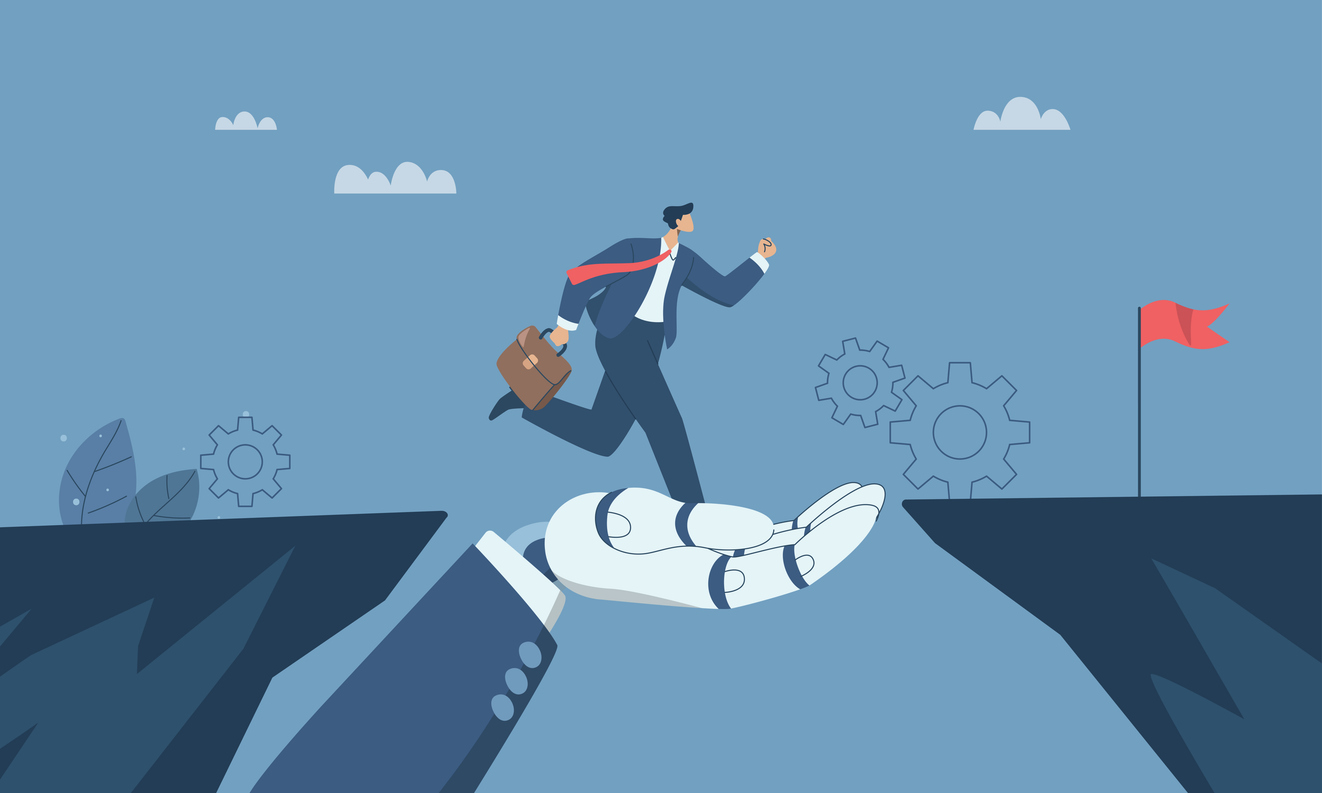
Used well, AI can help you do that more efficiently.
Drafting Faster, So You Can Think More
AI can jumpstart a communications plan or stakeholder map. But a seasoned practitioner adds the value: challenging assumptions, identifying hidden influencers, and tailoring messages to emotional undercurrents. Use AI to give you a first draft, then invest your energy where it matters most: insight, not formatting.
Surfacing Risks and Scenarios
Ask AI to play devil’s advocate. What risks are we missing? What if the change meets unexpected resistance from front-line supervisors? A good practitioner can use AI as a thinking partner to test scenarios and pressure-test plans.
Synthesizing Large Inputs
Faced with hundreds of survey responses or interview notes? AI can help you identify themes, sentiment, or confusion points — fast. But interpreting those insights, weighing their implications, and guiding next steps still require human discernment.
Enhancing Learning and Adoption
Given the right inputs from an expert human, AI tools can personalize learning experiences or simulate roleplays for different personas. A strong change manager knows how to embed these tools within a learning journey so they support, not distract from, behavior change.
A New Bar for Our Profession
Let’s be honest: not every change manager is up to the challenge. Some rely too heavily on templates, or default to tactics without strategy. AI will make it painfully obvious who is phoning it in.
But for those who are skilled, strategic, and people-savvy, AI is a powerful ally. The future of change management belongs to professionals who:
- Ask better questions than AI can.
- Understand the emotions and politics of organizational life.
- Use tools to enhance insight, not replace it.
- Bring a clear, human voice into ambiguous, high-stakes change.
AI may flood the market with “good enough” change content. But when the stakes are high — ERP rollouts, M&A, culture shifts — good enough won’t cut it. Leaders will look for change professionals who can think critically, act empathetically, and wield AI like a scalpel, not a crutch.
Those practitioners will rise. The rest will be replaced — not by AI, but by better humans.
Want to explore the topic in more detail? We’d love to chat: Book a meeting